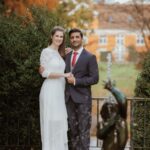
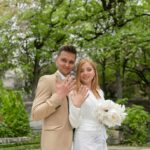
Many international couples choose to get married in Denmark, and French couples are no exception. The Danish civil process is clear, the ceremony is short and personal, and the whole application can be handled in English.
Whether you are both French or only one of you holds French nationality, there are a few steps on the French side that are worth knowing about before you book your trip. In this article, we go through what French nationals should do before the wedding, which documents are needed for the Danish application, what happens on the day, and how to have your marriage registered in France afterwards.
Why French couples choose Denmark
For many French couples, Denmark offers a simple and calm alternative to a large wedding at home. A civil wedding in Denmark is performed by a registrar from the municipality, and the ceremony itself takes only 10-15 minutes. That makes it easy to combine the wedding with a short trip, a city break or a honeymoon.
The Danish process is also predictable. Once your application has been submitted correctly, approval from the Agency of Family Law can come through in as little as five working days, although processing times are never guaranteed and depend on your individual situation.
After the ceremony, you receive two international marriage certificates in five languages: Danish, English, German, French and Spanish. Because French is one of the languages, the certificate is easy to read for French couples and their families.
What French nationals should do before the wedding
According to the French authorities, a marriage abroad is celebrated by the local authority according to the rules of the country where it takes place. At the same time, France asks its nationals to complete a few formalities before the wedding.
The most important one is the certificat de capacité à mariage (CCAM). French nationals apply for it at the French embassy or consulate of the place where the wedding will be held. For weddings in Denmark, this is the consular section of the French Embassy in Copenhagen. The embassy does not celebrate marriages itself, but it handles the French paperwork.
As part of the procedure, the publication des bans must take place for 10 days, unless an exemption is granted. The ceremony can only take place after this 10-day period has ended. The consular authority may also invite both future spouses to a hearing (audition), although it can decide to waive it.
The French Embassy in Denmark asks couples to send their file at least two months before the planned wedding date, and the French Ministry of Foreign Affairs recommends contacting the embassy preferably several months in advance. The embassy’s checklist includes, among other things, a completed application form, a full extract of the French spouse’s birth certificate dated less than three months, a copy of an ID card or passport and proof of address. Additional documents may be requested, and incomplete files are returned.
If the CCAM has not been obtained before the wedding, the French authorities state that transcription of the marriage remains possible afterwards, but a hearing by the consular authority is then required first.
Documents for the Danish application
The French CCAM and the Danish approval are two separate things. In Denmark, international couples apply to the Agency of Family Law (Familieretshuset) for permission to marry. Only when the Danish application has been approved can the wedding take place.
Which documents you need depends on your situation, for example your nationality, your residence status and whether one of you has been married before. You can see an overview of the required documents for a wedding in Denmark on our website.
There is an official fee for the application. As of 2026, the fee to the Agency of Family Law is DKK 2,100. The fee is reviewed annually, so it is a good idea to check the current amount before you apply.
Approval can come in as little as five working days, but it is never guaranteed. Missing or incorrect documents are one of the most common reasons for delays, so it is worth taking the time to prepare the application carefully.
The wedding ceremony in Denmark
A civil wedding in Denmark is short, warm and personal. The registrar gives a brief speech, asks whether you take each other as spouses, and you sign the marriage documents. In total, the ceremony takes about 10-15 minutes.
Two witnesses must be present at the ceremony. Depending on the municipality, the ceremony can be held in Danish, English or German, so you do not need to speak Danish to get married.
Right after the wedding, you receive two international marriage certificates in five languages: Danish, English, German, French and Spanish. Keep the originals safe, as you will need one of them for the French registration of your marriage.
After the wedding: transcription in France
To make your marriage fully effective in France, the French authorities recommend having the Danish marriage certificate transcribed into the French civil status registers. This is called transcription.
According to service-public.fr, transcription is not mandatory, but it is recommended. Without it, the marriage takes effect between the spouses and with regard to their children, but not with regard to third parties such as French administrations.
For a marriage celebrated in Denmark, the French spouse requests the transcription from the consular section of the French Embassy in Copenhagen. The embassy’s checklist includes a completed transcription form, the original Danish marriage certificate (vielsesattest), a full extract of the French spouse’s birth certificate dated less than three months, a copy of an ID card or passport and proof of address. A Danish spouse provides a personattest, while spouses of other nationalities have their own list of documents.
The embassy states that the transcription of a Danish marriage certificate takes approximately eight weeks after it has received a complete file.
The livret de famille
For many French couples, the livret de famille is an important part of being married. According to the French Ministry of Foreign Affairs, the transcription of the marriage in the consular registers is accompanied by the issue of a livret de famille.
If you already have a livret de famille, for example from the birth of a first child, the French Embassy in Denmark asks you to send it with your marriage file, so that the marriage can be added to it.
Do you need an apostille for France?
An apostille is an official certificate that confirms the authenticity of a public document. Whether you need one depends on where and how you will use your marriage certificate.
For the French transcription, the French Embassy in Copenhagen’s checklist asks for the original Danish marriage certificate, and it does not list an apostille for this document. The checklist does, however, require that a birth certificate from a non-Danish foreign spouse is legalised or apostilled. Because requirements can change, we recommend confirming with the consular section before you send your original documents.
If you need to use your marriage certificate elsewhere, an apostille may be required. You can read more about apostille for your Danish marriage certificate. When we handle the apostille for you, it is sent with DHL and typically arrives within 1-3 days.
Recognition of a marriage always depends on the rules of the country where the certificate is used. You can read more in our article on whether your Danish marriage certificate is recognized internationally.
We can help you with your wedding in Denmark
Getting married in Denmark as a French couple is a matter of doing things in the right order: the French formalities, the Danish application, the ceremony and finally the transcription in France.
At Just Married in Denmark, we help international couples with the Danish application, document preparation and the practical arrangements for their ceremony, so you can focus on the day itself.
You can read more about our wedding packages and prices or contact us if you would like help with the process.